
Off the Charts
The Notes in Our Genetic Cookbook
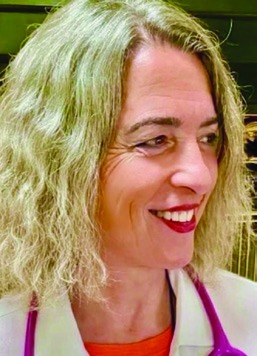
Yesterday I was invited to be on a discussion panel to discuss the movie: „The 100 Year Effect”with Dr Kent Thornburg. It was the first showing in the 2026 Wild River Film Festival. This fantastic documentary discusses epigenetics and how we can make a difference in the next generations.
Most of us learned that our genes are the body’s blueprint: a set of inherited instructions written in DNA. That is true—but it is only part of the story.
Epigenetics helps explain why cells carrying essentially the same DNA can have completely different jobs. A skin cell behaves like skin, a heart cell beats, and a nerve cell carries messages—all while possessing nearly identical genetic instructions.
Epigenetics refers to the ways cells control whether genes are used without changing the underlying DNA sequence. If DNA is a cookbook, epigenetics is the collection of bookmarks, sticky notes, locks, and highlights that tells a cell which recipes to read and which to leave closed.
This matters because genes are not simply “good” or “bad,” nor are they permanently switched on or off. Instead, cells continually regulate gene activity according to their identity, developmental stage, environment, and needs.
Simplified, there are several types of epigenetic control that include chemical and structural changes.
Every person begins as a single fertilized cell. From that one cell arises a variety of tissues: blood, muscle, bone, liver, retina, brain, skin, and so on.
The reason is not that each cell has a different set of genes. Rather, different cells activate different parts of the same genetic library. Epigenetic signals help establish and preserve those cell-specific patterns.
This is also one reason identical twins can become more different over time. Their DNA begins very similar, but their lives are not identical. Differences in illness, diet, activity, stress, sleep, exposures, and ordinary chance can all contribute to differences in how genes are regulated.
That does not mean every life event leaves a permanent epigenetic mark, or that epigenetics explains every difference between people. It does mean that biology is more responsive and more flexible than the old “DNA equals destiny” model suggests.
Epigenetics is important in normal growth and development, immune function, brain function, aging, and tissue repair. It is also a major area of research in cancer and other diseases.
Cancer cells often develop abnormal epigenetic patterns. A protective gene may be inappropriately silenced, or a gene that promotes cell growth may become overly active. Unlike a DNA mutation, some epigenetic changes may be reversible. That possibility has led to medicines that target epigenetic machinery in selected blood cancers and other malignancies.
Researchers are also studying epigenetic patterns as possible early-warning signs or “biomarkers” for disease. In the future, such patterns may help physicians estimate risk, classify cancers, choose treatments, or monitor response to therapy.
Dr Thornburg highlights in his documentary that we indeed can change our epigenetics AND that of the next generation. Cells naturally alter gene-regulatory signals throughout life. Environmental exposures, nutrition, inflammation, hormones, activity, smoking, alcohol, sleep, aging, and medications can all influence biological pathways that include epigenetic regulation in our body, which would include the eggs or sperm cells that we make.
Dr Thornburg’s documentary highlights nutrition’s impact on our epigenetics and how factors such as pricing of food, advertising and convenience is making it very hard for us to be able to make the choices for a healthy epigenome.
Perhaps the most useful lesson from epigenetics is one of balance. We inherit genes, and those genes matter. But genes are not a rigid script that dictates every outcome.
DNA may provide the cookbook. Epigenetics helps decide which recipes are prepared today.