
Who Should Pay for the Fairgrounds?
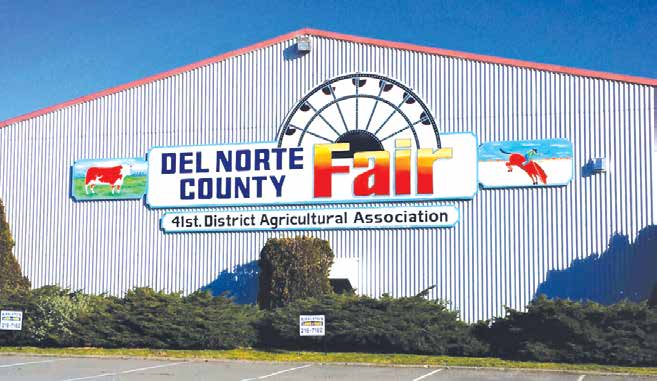
At the Oct. 6 meeting of the 41st District Agricultural Association, which oversees the Del Norte County Fairgrounds, public attendance was noticeably light. However, the meeting raised an important question that deserves far more public attention: Why are local fairgrounds expected to shoulder the expense of maintaining aging buildings and infrastructure, and what financial responsibility does the State of California have?
During public comment, I asked why taxpayers were being burdened with maintaining fairground buildings and structures rather than the state accepting responsibility for the facilities under its oversight.
Fair Manager Kim Floyd responded that she was working on the issue alongside representatives of Fair Manager Kim Floyd responded that she was working on the issue alongside representatives of other fairs throughout California. The statewide network includes approximately 58 fairs, one for each county.
Her response raises a larger question about how California funds its fairgrounds and whether the state has shifted too much financial responsibility onto smaller rural communities already struggling with limited resources.
The Del Norte County Fairgrounds are more than a place for carnival rides, livestock exhibitions and cotton candy. The property serves as a community gathering place, accommodates year-round activities and offers facilities that may be important during emergencies. Maintaining those buildings, grounds, utilities and infrastructure is essential, but who should pay?
The October agenda packet illustrates some of the financial challenges facing the local fair. A proposed agreement with the California Department of Food and Agriculture provides $47,550 for fiscal year 2026–2027. Those funds may be used for payroll, utilities, equipment, supplies and maintenance. However, that amount must stretch across numerous operational needs and is hardly sufficient to address major structural repairs or years of deferred maintenance.
Another agenda item involved the livestock transformer project. According to the packet, the California Construction Authority estimated that approximately $62,000 in additional funding would be needed to move the project forward. This follows an earlier $8,400 engineering agreement. Such expenses can quickly overwhelm a smaller fair's available financial resources.
What makes California's fair funding system particularly interesting is the enormous difference in revenue-generating capacity between fairs. Some of the state's larger fairs attract hundreds of thousands of visitors and generate millions of dollars annually through admissions, commercial exhibitions, entertainment, sponsorships and facility rentals. Smaller rural fairs, including Del Norte, do not enjoy those same financial advantages.
A large metropolitan fair may have the resources to absorb substantial maintenance expenses, while a small rural fair must carefully manage every dollar simply to keep its doors open. Yet both operate within California's statewide fair system and face the costly reality of aging infrastructure.
In 2011, California eliminated a $32 million annual General Fund appropriation that historically supported its fair network. Since then, fairs have become increasingly dependent upon locally generated revenue, rentals, grants, sponsorships and other funding sources.
California Food and Agricultural Code Section 3951 establishes the purposes of district agricultural associations, including constructing, maintaining and operating recreational and cultural facilities. However, that law does not automatically establish that the state must pay every maintenance expense.
The California Department of Food and Agriculture also exercises oversight of the fair system, and the California State Auditor has identified financing and supporting infrastructure among the responsibilities of the department's Fairs and Expositions Branch.
This raises an important distinction between operating a fair and preserving public infrastructure. Selling tickets and renting facilities are revenue-generating activities. Replacing electrical systems, repairing roofs, maintaining buildings and addressing structural deterioration can require investments far beyond what a small rural community can reasonably generate.
There is also the unresolved question of ownership. Which buildings and improvements belong to the state, which belong to the district agricultural association, and what agreements determine who is financially responsible for their maintenance? Those questions deserve answers before the public can determine whether the existing funding arrangement is fair.
Floyd's acknowledgment that the funding issue is being addressed at a broader statewide level is encouraging. However, taxpayers deserve to know whether legislative changes are being pursued, what assistance is available, and whether California's smaller fairs are receiving funding proportionate to their actual needs.
For generations, the Del Norte County Fair has brought families, farmers, livestock exhibitors, young people and local businesses together. It remains one of the community's cherished traditions. Preserving that tradition involves more than keeping the annual fair alive. It means ensuring that the grounds and facilities remain safe, functional and financially sustainable for future generations.
The question is not whether the Del Norte County Fairgrounds deserve to be maintained. They certainly do. The question is whether California's funding system adequately recognizes the difference between a multimillion-dollar metropolitan fair and a rural fair that is doing its best simply to survive.
A fair funding system should recognize that difference rather than expecting every community to carry the same financial burden with vastly different resources.