
Call It Like It Is
There is the first time for everything, and this is one of them, writing an editorial without restrictions.
This column will be devoted to bringing common sense to local, state and, occasionally, national issues. For the average voter, the political landscape has become an exhausting cycle of recycled promises and unaffordable results.
We see the same systemic failures in our schools, our infrastructure, and our state budget year after year, yet the faces in the halls of power rarely change. This stagnation is not an accident; it is the result of a profound accountability gap that separates the legislators from the common-sense realities of the people they represent.
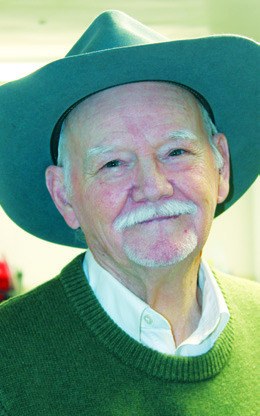
I want you to know that I’m politically active and running for State Assembly, as the Republican candidate against the current incumbent. It’s interesting to note that the last syllable in the word is “bent”, especially as we see so many politicians with hands in the cookie jar funded by taxpayers. That “cookie jar” is also filled with corporate donations, nonprofit expenditures, union contributions, and a myriad of other entities that receive considerations for their pet laws and mandates; hence the word incumbent is appropriate, especially in California.
The widespread fraud in California, that has recently been reported, is staggering because no one is holding our legislators accountable, in fact the current democrat legislature has rejected all efforts to hold themselves accountable and are passing legislation to prevent the investigation of the crimes.
By emphasizing the word “bent,” it creates a metaphor for a political class that has lost its integrity. In my view, to be an incumbent in the current climate is to be swayed, tilted, or corrupted by the gravitational pull of outside influence rather than standing straight and true for the constituent.
When a politician becomes “bent,” the concept of local agency is effectively erased. The representative stops being a conduit for the community’s will and becomes a tool for those who ensure their political longevity. This “bending” is what allows career politicians to thrive, while the actual needs of the district go unmet.
There is a “Common Sense Paradox”, that asserts accountability and common sense are linked together, you cannot have a functional society without both.
The California legislators are very much like the story “King (Emperor) Has No Clothes” and is a metaphor to describe the fragility of our current political establishment. The only thing keeping these “unaccountable” politicians in power is the collective hesitation of the electorate to point out the obvious nakedness of their failures.
Perhaps the most egregious example of legislative hypocrisy is found in the internal friction between California’s own educational bodies. I highlight a striking instance where the California School Board Association (CSBA), a group representing local governance, felt compelled to call out the California Department of Education (CDE) for a total lack of accountability.
The irony here is sharp: the state legislature is currently passing three bills aimed at holding state educational committees to specific standards, yet that same legislature has consistently rejected all efforts to hold itself to any standard of accountability.
One must view this as a systemic failure of the highest order. It is an exercise in “do as I say, not as I do,” where the ruling majority protects its own fiscal and administrative failures, while simultaneously tightening the screws on local agencies.
This legislative action suggests that the checks and balances designed to protect the public are being intentionally dismantled by the democrats in the legislature (including my opponent) as they ignore the rules that are meant to restrain their greed for power and money.
Instead of common sense and accountability, the ruling political class survives on intimidation and perceived guilt through print and social media sources, bought with money from the “cookie jar.”
If voters were to apply basic logic to the results of the failed policies that occur in their daily lives, the facade of the “incumbent” would crumble. The paradox lies in the fact that the very people suffering under these failed policies are often the ones who return the architects of those failed policies to power. The final takeaway is an urgent reminder: accountability is not a gift that the government grants to its citizens; it is a demand that citizens must impose upon their government. The power to break the cycle of the “incumbent” lies solely with an informed and common-sense driven public. As you consider your local and state representation, the question remains: are you voting for a leader who stands upright for your interests, or are you simply feeding a system that has long since “bent” toward corruption?